You can't get far in discussing anime without mentioning its printed counterpart manga. The relationship between them is so close they're often referred to together as the anime/manga industry. Manga is often the source of anime, and some popular anime titles become manga. In the same way anime isn't just a cartoon; manga are more than just comic books.
Manga you could say, is the Japanese equivalent of American Comics. Which is true in that they're both illustrated and distributed on paper, however manga is far more diverse compared to what we call comics. Much like anime, manga is not simply targeted at children. It isn't uncommon to see a regular business man in Japan on the subway reading manga. With such a diverse target audience, obviously the topic range is diverse too.
Manga spans a wide variety of topics. From the cute / romantic Oh! My Goddess, to the dark / violent Blade of the Immortal, there is a lot to choose from. Traditional American comics once covered a broad range of topics: super heroes, comedy, and adventure just to name a few. However, over time the market oriented itself towards the superhero genre and became a niche market. In Japan diversity flourished with broad range of topics to suit many audiences. Coming full circle, imported translated manga is finding audiences formerly untapped here in America, such as drama oriented manga for girls.
Manga often has a more focused story, with series typically beginning with an end in mind. In this way manga can have deeper plots similar to a novel. This can help avoid more shallow stories often found in open ended series intended to run as long as commercially viable, and has a "episode of the week" feel. This can be counter intuitive to Americans, in that a manga series may end at the height of its popularity.
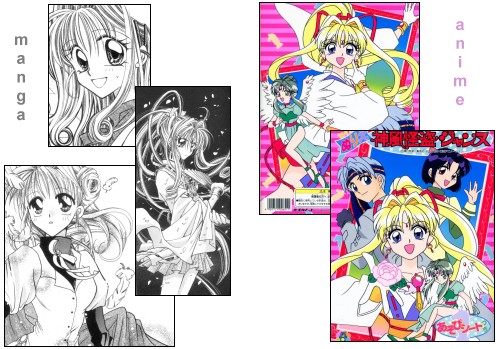
The basic look of manga is similar to that of anime, but styles vary widely depending on the artist. Manga is almost always printed in black and white. Part of this is due to tradition as its always been done that way. While not remembered by most Americans today, color illustrations were very rare in books published during the first half of the 20th century. The biggest factor is cost, as color adds a substantial overhead to price. Manga are often published in magazine collections intended for consumption like newspapers (generally not color either). By keeping costs down, manga remains attractive to readers, instead of becoming a cost prohibitive item to be collected. Lacking color doesn't detract from the artwork and may even enhance it. Because works can't hide behind color touch ups, attention to detail becomes important and the artists style is clearly visible. Shading can utilize pain staking pen-sketch techniques typical of older American and European publications, however most artists employ a large range of tools to assist with shades, textures, and inking. Titles crossing over into anime form often lose much of the their artistic style. More recent anime adaptations better retain the artistic style of the source manga, compared to older titles which often adopted the "anime look" of the era (80s-90s). Sometimes the anime looks better, but sometimes the art is a step backwards. Compare: Kamakaze Kaito Jenne. Some genres follow a certain styles as well. Shoujo, (girls comics) typically have "lanky" or "skinny" looking characters with more delicate features than other forms of manga.
English only has a few expressions (ex: "ka-boom") which aren't exactly
words, however Japanese has many such words used accentuate artwork. For
example pika pika
is like a twinkle, like the gleam off a sword.
Niko
implies a smile. Sometimes these are called "sound words" but
they aren't really sounds. For example, shiin
is the "sound" of silence.
In English crickets chirping implies a quiet audience, but there isn't exactly
a word you would write over a picture meaning there is no sound. This can
emphasize things a reader might miss in the artwork alone. Japanese has a
variety of animal sounds quite different from English. For example "meow" is
nyan
.
Japanese is written in 4 styles. The first, kanji (漢字); originated in China. Each kanji has a meaning (or represents one word you could say), which can be combined to form different words. The second, hiragana; is a written phonetic symbol. There are 46 hiragana. Each make a sound such as ま(ma) or せ(se). Normally Japanese writing is a mix of hiragana and kanji. The third type is katakana; similar to hiragana except reserved to spell foreign words such as コ-ヒ- (koohii/coffee). The forth is romaji: western style letters like you are reading now. Japanese, unlike Chinese; is more easily adapted to English characters.
Japanese writing allows for more artistic flare, and is far more conductive to narrating illustrations. There is plenty of versatility in text placement, as Japanese can be written left to right, or top to bottom. Kanji are typically much more compact compared to romanised characters. Knowlege of kanji requires education, which can problematic for younger readers who haven't had much schooling yet. To navigate the basics of reading in Japan, a person needs to know at least a few hundred Kanji, and well over a thousand to be considered literate. Sometimes this is overcome by placing the phonetic hiragana near the kanji in a small font (furigana). In this respect, Japanese comics might be considered educational. Manga titles for adults rarely have furigana, making it an easy way to tell the intended age of an audience.
Example of the same word (wind) represented in different writing styles
| Kanji | Hiragana | Romaji |
|---|---|---|
| 風 | かぜ | kaze |
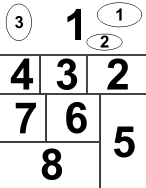
Traditional Japanese books are read opposite of English texts; That is, you start a book from the "back cover" and read towards the "front cover" (right to left). Likewise picture cells flow from right to left and top to bottom. During translations, this means entire pages including pictures must be mirrored. As Japanese is usually written vertically, "word bubbles" also tend to be oriented vertically. As English doesn't naturally flow in this direction, translation dialog placements can be challenging. A more recent trend by publishers in America, notably Tokyopop; is to translate manga without mirroring. This requires reading "back to front". Typically there is a warning on the "first" page indicating that you're reading in the wrong direction with brief instructions.
On this site I often group paper works as "manga", but sometimes they are actually Light Novels. A light novel is text based, and may have a few manga style illustrations. Most pictures on this page are in fact from a light novel. The target demographic is the same as manga, so they often cover the same topics. Light novels differ from standard novels being far shorter, and mainly based off of character dialog. Light novels have become quite popular in Japan, but thus far haven't gained much traction in America (compared to manga). Some light novels are later made into manga as well.
Amateur manga is called Doujinshi. Although doujinshi isn't formally distributed by a publisher, the quality can rival (or surpass) that of commercial manga. Doujinshi is often distributed by artists at comic conventions, the largest being Comiket with about half a million attendees. Some works are original, but many are not. Doujinshi occupies a copyright grey area in Japan, allowing them to create stories based off of official published works. Many artists aspire to transition into a professional career with their own true manga, while some are content to stick to lower stress amateur publishing (less pressure in deadlines and popularity). Often these are adult in nature.
Manga Samples
|
Read Left to Right 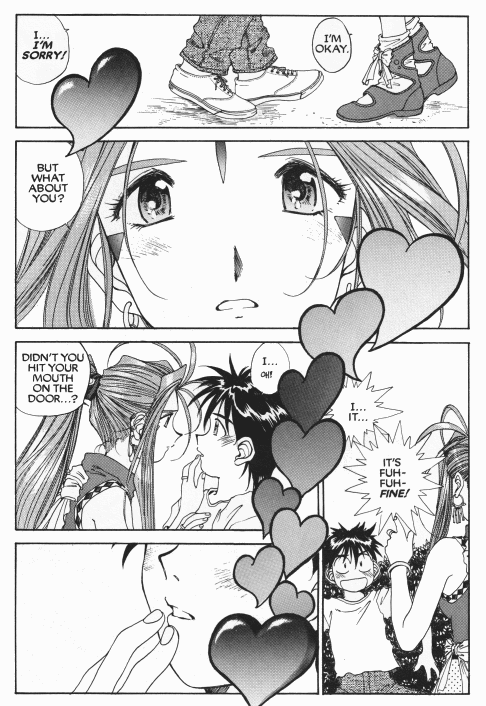
Oh My Goddess |
Read Right to Left 
Kancolle Doujinshi |
Read Right to Left 
Gunslinger Girl |
Read Right to Left 
Nana & Kaoru |